
UPF 50 means a fabric lets through only 1/50th of the ultraviolet radiation hitting it, about 2% transmission, roughly 98% blocked. It covers both UVA and UVB, and it’s a rating for fabric, not the sunscreen-based SPF scale. For extended outdoor exposure, especially on the water, aiming for UPF 50 or higher is recommended.
TL;DR:
- UPF 50 fabrics block approximately 98% of UV radiation, making them ideal for extended outdoor activities, especially on water.
- UV protection degrades over time due to washing, stretching, or sun bleaching, requiring garment replacement when fabric thins or shows wear.
- The difference of about one percentage point between UPF 30 and UPF 50 significantly reduces cumulative UV exposure during prolonged or high-risk outdoor exposure.
- Using UPF 50 clothing alongside sunscreen and head protection maximizes sun safety, particularly on reflective surfaces like water.
- Proper garment care and inspection before use help ensure clothing maintains its UPF rating throughout a season of paddling or outdoor use.
Table of Contents
- How Is UPF Measured, and How Is It Different From SPF?
- What Does UPF 50 Mean in Percent Terms?
- UPF 50 vs UPF 30: When Does the Extra Protection Matter?
- What Changes a Garment’s UPF Rating in Real Use?
- How Long Does UPF 50 Clothing Actually Last?
- How Do You Use UPF 50 Clothing Effectively?
- Which Joypaddling Gear Fits Paddling Sun and Weather Needs?
- A Paddler’s Bottom Line on Sun Protection
- Gear Up for Long Days on the Water
- Where to Read More on UPF and Sun Safety
- Sources
- FAQ
How Is UPF Measured, and How Is It Different From SPF?
Labs calculate UPF as a ratio: the amount of UV hitting bare skin divided by the amount that gets through the fabric. A spectrophotometer or spectroradiometer measures how much UV passes through a swatch across the UVA and UVB spectrum, then applies erythemal weighting, a formula that accounts for how badly each wavelength burns skin, to produce a single number. Hit 50 or above on that math and the garment earns a “50+” label.
That process is nothing like SPF testing, which historically relies on human volunteers and measures how long skin takes to redden under sunscreen versus without it, focused mostly on UVB. UPF testing skips people entirely and covers both UV bands at once.
A few reference points worth knowing:
- UPF testing follows standards like AS/NZS 4399:2020, overseen by ARPANSA in Australia.
- Textile labs also reference AATCC 183 and ASTM D 6603 for consumer labeling procedures.
- SPF measures sunburn delay from sunscreen; UPF measures UV transmission through cloth.
What Does UPF 50 Mean in Percent Terms?
Numbers translate directly to blocked UV, and the jumps aren’t as small as they look. UPF 15 blocks about 93% of UV, UPF 30 blocks about 97%, and UPF 50 blocks roughly 98%.
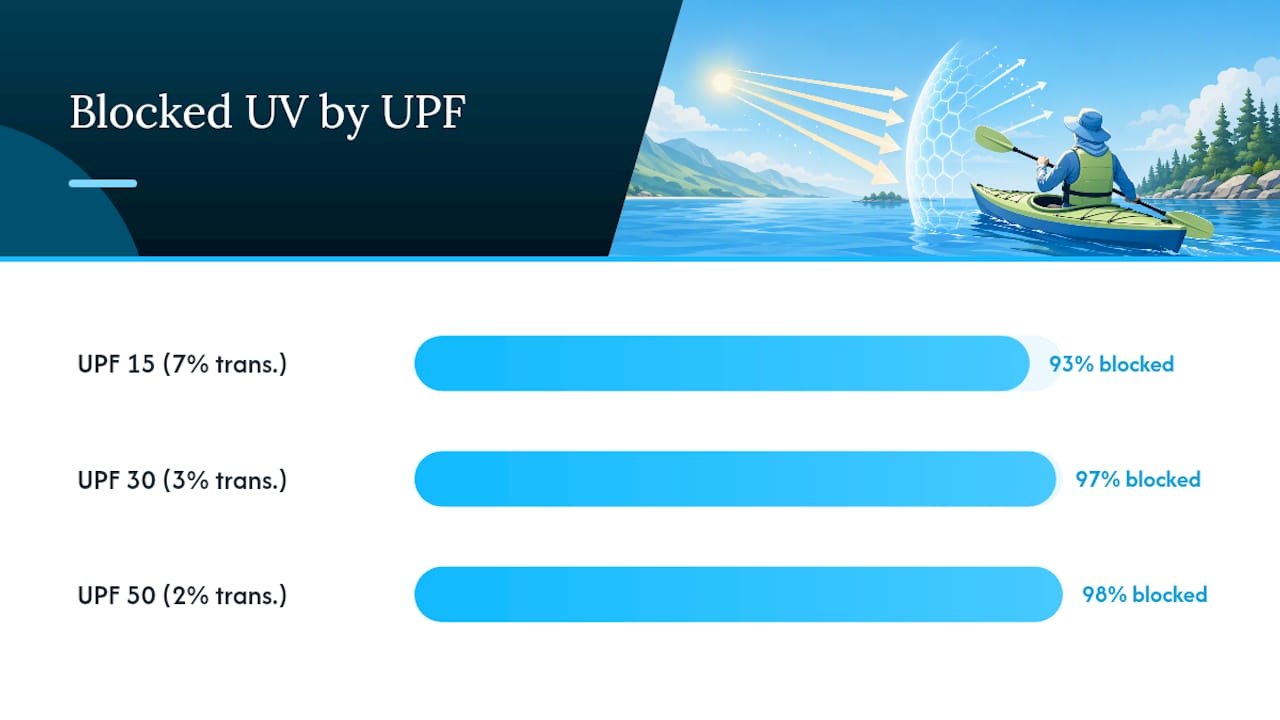
The gap between “good” and “excellent” is smaller than it sounds, but it compounds. ARPANSA classifies UPF 15 as minimum protection, UPF 30 as good, and UPF 50 or 50+ as excellent. The Skin Cancer Foundation uses the same threshold for its Seal of Recommendation: a garment needs a UPF of 50 to qualify, with 30 to 49 rated very good.
A 1 percentage point difference between UPF 30 and UPF 50 sounds trivial in isolation. Stretched across a six hour kayak trip in direct sun, that extra sliver of blocked UV adds up to meaningfully less cumulative dose reaching skin.
UPF 50 vs UPF 30: When Does the Extra Protection Matter?
The absolute difference between UPF 30 and UPF 50 is about one percentage point of blocked UV, but dermatology sources frame it as a real cumulative dose reduction for anyone with repeated, prolonged exposure, not a rounding error. U.S. Dermatology Partners recommends UPF 50+ specifically for extended outdoor time or higher-risk skin types.
UPF 50 earns its premium in a few specific situations:
- All-day outdoor exposure, especially between late morning and mid-afternoon
- Water activities, where reflected UV off the surface adds to direct exposure
- Fair skin, a history of sunburns, or a personal or family history of skin cancer
- High UV Index days, regardless of cloud cover
The decision rule is simple: for anything beyond an hour or two outside, or for water sports where glare bounces UV back up at you, choose 50+ over 30. Below that, UPF 30 still performs well.
What Changes a Garment’s UPF Rating in Real Use?
A shirt’s printed UPF number describes it new, dry, and unstretched. Real-world use changes that number, sometimes a lot.
Fabric construction drives the baseline. Tighter weaves, thicker fibers, darker colors, and chemical UV-absorbing treatments all raise UPF, while loose, thin, or bleached-out fabric drops it. Use changes the number too. Wet fabric transmits more UV than dry fabric, often noticeably more. Stretching a shirt across the back or shoulders opens up the weave. Repeated abrasion, pilling, and sun bleaching all wear down protection over time.
Three habits keep a garment closer to its label rating:
- Follow the care label exactly, since some UV treatments wash out faster under high heat or harsh detergent.
- Rinse chlorine or salt water off gear when possible, since both accelerate fiber breakdown.
- Retire a garment once it looks thin, faded, or stretched out of shape, regardless of how recently it was purchased.
Pro Tip: Hold a sun-shirt up to a bright window before a big trip. If light passes through easily where the fabric has thinned or stretched, its real-world UPF has likely dropped below the tag.
How Long Does UPF 50 Clothing Actually Last?
Textile standards like the simulated wear and laundering procedures referenced in ASTM D 6544 exist because manufacturers know UPF degrades with age. That testing exposes fabric to repeated washing and simulated sunlight to estimate how protection holds up over a garment’s life, not just on day one.
In practice, most sun shirts hold their rating well through a normal season of use. Watch for these signs that a garment has slipped below its label:
- Visible thinning or a see-through look when held to light
- Heavy pilling or a rougher, worn texture across high-friction areas
- A stretched-out weave around the shoulders, elbows, or hem
- Noticeable fading from repeated sun exposure
A garment that shows any of these after a heavy season of paddling, hiking, or beach use is worth replacing, even if it still fits fine.
How Do You Use UPF 50 Clothing Effectively?
A UPF 50 shirt only protects the skin it covers, so coverage strategy matters as much as the fabric itself. Long sleeves, a high collar, and a brimmed hat handle the areas most exposed to direct and reflected sun. Everything left bare, face, hands, backs of knees, still needs sunscreen.
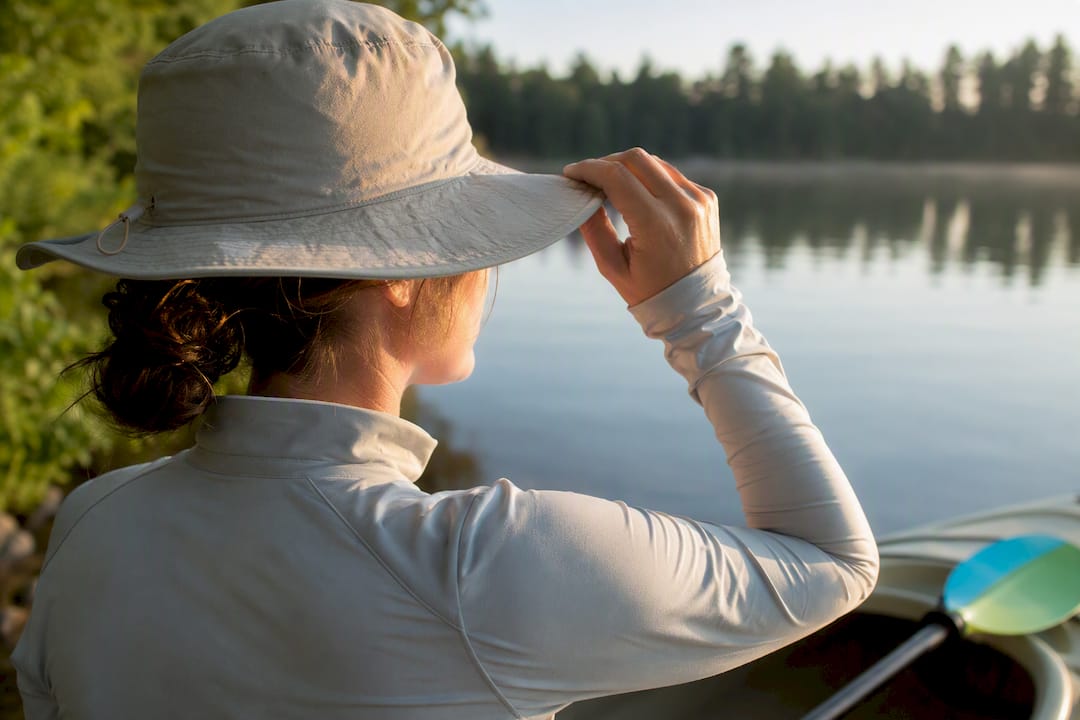
Cleveland Clinic recommends treating clothing and sunscreen as a combined system rather than picking one. Apply sunscreen to exposed skin before heading out, and reapply after swimming or heavy sweating, since even water-resistant formulas break down faster than most people expect.
For paddlers specifically:
- Expect garments to get wet, which lowers UPF, so don’t rely on a soaked shirt as your only shield during a long outing.
- Water reflects UV back up at the face and neck, so a hat with a brim and coverage over the forearms matters more on a kayak than on a shaded trail.
- Prioritize the head, neck, and forearms first. Those areas take the most direct and reflected exposure on the water.
Pairing a proper sun shirt with gear designed to handle wet, exposed conditions rounds out a paddling sun-safety kit better than any single item can.
Which Joypaddling Gear Fits Paddling Sun and Weather Needs?
Different paddling conditions call for different gear, and matching the piece to the situation matters more than chasing a single miracle garment. A windbreaker cuts wind chill on cool mornings and adds a layer over bare arms when the sun is highest. A quarter-zip pullover works the same way for layering on changeable days, letting you vent or zip up as conditions shift.
Coverage choices worth thinking through:
- Caps and brimmed hats shade the face and back of the neck, both high-exposure zones on open water.
- Quick-dry fabrics matter more than heavy cotton once a garment gets splashed.
- A waterproof phone bag keeps essentials dry so you’re not tempted to skip reapplying sunscreen just to protect a device.
- Fit that allows layering without restricting paddle strokes beats a snug cut every time.
None of this replaces a lab-tested UPF number, but the right layers make it easier to actually wear coverage all day instead of overheating and taking it off by noon.
A Paddler’s Bottom Line on Sun Protection
For anything longer than an hour on the water, UPF 50+ is worth prioritizing over lower ratings, especially with sun bouncing off the surface all day. Pair it with sunscreen on exposed skin and a brimmed hat. A shirt only protects what it covers, so check care labels and replace anything that’s stretched thin.
— Fillip
Gear Up for Long Days on the Water
Some outdoor apparel brands design gear with paddling conditions in mind, aiming to handle wind, splash, and long hours of sun exposure. Such gear may offer a balance between function and style for water activities.
If you’re heading out for a full day on the water, start with layering pieces that handle both wind and sun. The J&P Windbreaker Jacket blocks wind chill on cool mornings and adds a coverage layer once the sun climbs, and the J&P Quarter-Zip Pullover works well for the same reason on changeable days. Top it off with J&P Baseball Caps for face and neck shade, and drop your phone in a Waterproof Phone Bag so it survives the splash. Browse the full T-Shirt prints collection or check current Accessories to round out your kit before your next launch.
Where to Read More on UPF and Sun Safety
- ARPANSA: the official AS/NZS 4399 standard behind UPF testing.
- Skin Cancer Foundation: consumer guidance and seal criteria.
- Cleveland Clinic: medical context on clothing versus sunscreen.
- REI Expert Advice: practical buying tips for UPF gear.
Sources
- Australian sun protective clothing | ARPANSA
- What the Skin Cancer Foundation Says about Sun-Protective Clothing
- How to choose sun protection UPF clothing | REI Expert Advice
- How UV protection clothing works — Cleveland Clinic
FAQ
Is UPF 50 the Same as SPF 50?
No. UPF rates fabric using instrument testing across UVA and UVB, while SPF rates sunscreen using human testing focused mainly on UVB-driven sunburn.
Is SPF Better Than UPF?
Neither is “better.” They measure different products for different purposes, and dermatology guidance recommends combining both for full coverage.
Is UPF 50 Good Enough?
Yes. UPF 50 blocks about 98% of UV radiation and meets the Skin Cancer Foundation’s threshold for “excellent” protection, suitable for prolonged outdoor and water exposure.
How Long Does UPF 50 Clothing Last?
Most garments hold their rating through a normal season of regular use, but washing, stretching, abrasion, and sun bleaching gradually lower protection, so replace anything that looks thin, faded, or stretched out.