
Pick one of three outfit families based on conditions: sun-protective quick-dry gear for warm days, a layered quick-dry system with a paddling jacket for cool weather, and a wetsuit or drysuit setup for cold or cold-water trips. Whichever family you choose, a properly fitted PFD stays on the whole time you’re on the water.
TL;DR:
- Always dress for water temperature, not air temperature, and avoid cotton in layering systems to prevent heat loss when immersed.
- Wear properly fitted PFDs that stay secure during movement, with a five-step pre-launch check to ensure safety and comfort.
- Use neoprene booties for cold water and secure sandals or water shoes for warmer conditions, replacing footwear when water feels uncomfortable or cold.
- In saltwater, rinse gear thoroughly after each trip and store it dry to preserve elasticity and prevent odor, avoiding fabric softeners.
- Including a spare dry layer and testing footwear in grit before long trips enhances safety and comfort across all paddling conditions.
Table of Contents
- Kayaking Outfit Ideas by Season and Trip Type
- Building a Layering System That Actually Works on Water
- Footwear and Accessories You Need Every Trip
- PFD Fit and a Pre-Launch Clothing Check
- Looking Good Without Sacrificing Function
- How Joy Paddling Apparel Fits These Outfit Ideas
- Adapting Your Outfit for Kayak Fishing
- Cleaning and Storing Your Kayaking Clothes
- What I’ve Learned About Dressing for the Water
- Gear Up With Joy Paddling for Your Next Paddle Day
- Sources
- FAQ
Kayaking Outfit Ideas by Season and Trip Type
The fastest way to plan a kayak trip wardrobe is to match it to the water, not the weather forecast on your phone. Air temperature lies to you. Water temperature doesn’t. Here are combos worth copying, organized by the kind of paddling day you’re actually facing.
- Warm lake day. A short-sleeve or sleeveless rashguard, quick-dry shorts, and secure-strap sandals. Add a wide-brim hat and polarized sunglasses since sun protection and quick-dry fabric are the top priorities in warm weather.
- Long touring day, sunny. Swap to a long-sleeve UPF shirt to avoid reapplying sunscreen every hour, paired with quick-dry leggings or paddling pants.
- Sit-on-top kayak, splashy conditions. Expect to get wet no matter what, so lean into a full swimsuit or rashguard set with neoprene booties for grip on a wet deck.
- Choppy coastal paddle. Layer a quick-dry base under a paddling jacket with a spray skirt if your boat takes one, plus neoprene booties and a brimmed hat with a chin strap.
- Rainy but mild day. A breathable rain shell over a light base layer keeps you dry from above while staying cool enough underneath.
- Cold-water practice or rolling sessions. This is wetsuit or drysuit territory, full stop, regardless of how warm the air feels.
- Shoulder-season morning launch, warming afternoon. Start in a light fleece mid-layer under a shell, then peel down to just the base layer as the sun climbs. This is where a dry bag with a spare top earns its keep.
- Family paddle with kids in tow. Simple, forgiving choices work best here: quick-dry tees, secure sandals, and hats with retainers so nobody loses one overboard chasing a duck.
Quick substitutions matter more than the exact outfit. Swap sandals for booties the moment water temperature drops below comfortable wading range. Add neoprene pogies or paddling gloves once your hands start aching within the first ten minutes.
Pro Tip: Wear bright or high-contrast colors, even on a casual paddle. A neon rashguard or a bright yellow hat makes you dramatically easier to spot from a boat, a bridge, or a rescue swimmer’s vantage point.
Building a Layering System That Actually Works on Water
A workable layering system has three parts: a base layer against your skin, a mid-layer for insulation, and a shell to block wind and spray. Get the fabric choice wrong and the whole system falls apart, no matter how many layers you stack.
- Base layer: polyester, nylon, or merino wool. All three wick moisture and keep insulating even damp.
- Mid-layer: fleece or a thin synthetic puffy for warmth without bulk.
- Shell: a paddling jacket or rain shell with snug cuffs to keep water from crawling up your sleeves.
- Cold-water systems: neoprene wetsuits for cool-to-cold water, dry suits for genuinely cold conditions where a wetsuit isn’t enough insulation.
Cotton has no place in any of these layers because it soaks up water and stops insulating the moment it’s wet, which is exactly the moment you need it most.
The real decision point is water temperature, not air temperature. REI’s guidance is blunt about this: dress for the swim, not the paddle. That’s because water pulls heat from your body far faster than air does.
Water conducts heat away from the body about 25 times faster than air. That single fact is why “dress for immersion” isn’t cautious advice. It’s the whole point.
Footwear and Accessories You Need Every Trip
Footwear is where a lot of paddlers cut corners, and it’s the wrong place to save money or effort. Neoprene booties give you traction and warmth in cool water, while sandals with secure straps handle warm-water trips fine. Skip flip-flops entirely. They’re gone the second a wave hits your foot.
- Neoprene booties for cool water and rocky put-ins.
- Strapped sandals or water shoes for warm, sandy launches.
- A wide-brim hat with a leash so it survives a gust.
- Polarized sunglasses with a retainer strap.
- A waterproof phone case and a dry bag for spare layers.
- Quick-dry socks under booties if you run cold.
Size booties slightly loose to allow a thin sock underneath, and check that sandal straps won’t slip when wet.
PFD Fit and a Pre-Launch Clothing Check
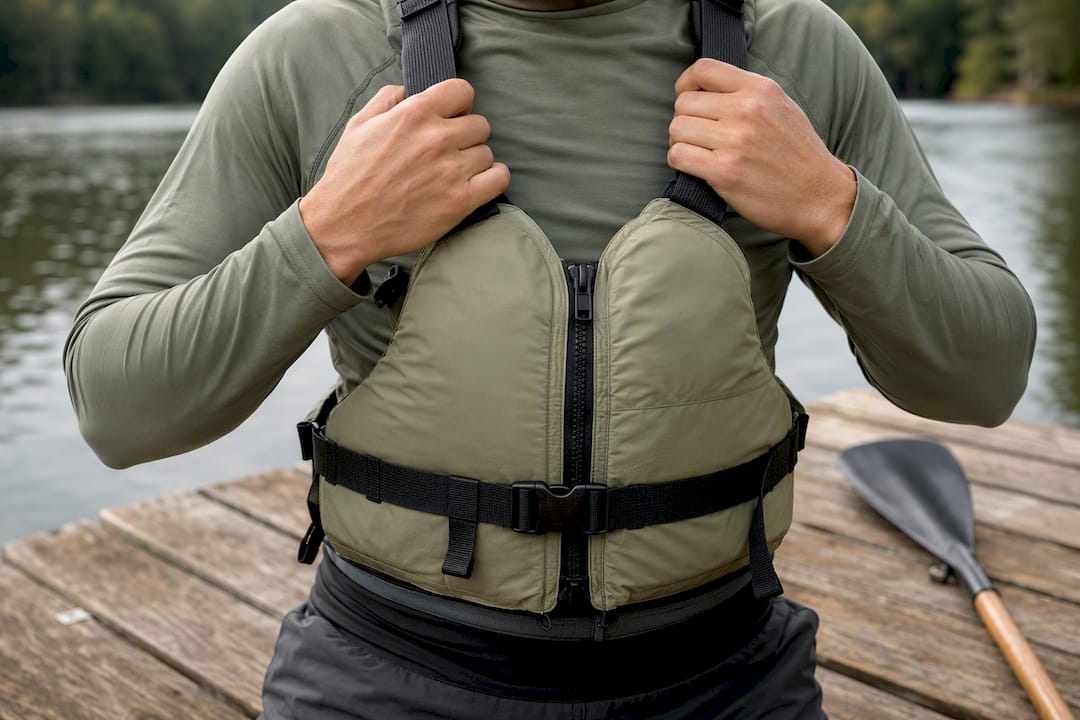
Your PFD should sit snug against your torso without riding up when you raise your arms overhead. If it slides toward your ears when you pull upward, tighten the side straps. A loose PFD won’t keep you afloat properly when you actually need it, and outfitters that rent gear require a proper fit for good reason.
Run this five-step check before you push off:
- Confirm your outfit matches water temperature, not air temperature.
- Put the PFD on and cinch it snug.
- Secure your hat with a leash or chin strap.
- Attach a retainer to your sunglasses.
- Pack one spare dry layer in a dry bag.
Dressing for immersion isn’t paranoia. It’s just math: cold water drains body heat fast, and a five-minute prep routine costs you nothing compared to the alternative.
Looking Good Without Sacrificing Function
Function and style aren’t opposites on the water, they just require picking the right cut. Form-fitting rashguards and technical leggings snag less on gear and paddle straps than loose, baggy clothing, and they happen to photograph better too.
- Choose fitted, not baggy, for anything near your cockpit or footwall.
- Bright or patterned layers double as visibility gear and a look you’ll actually want in photos.
- Pack a casual tee or a cap for the after-paddle coffee stop so you’re not stuck in wet gear all afternoon.
- Keep one quick-change piece, like a light pullover, for an easy transition back to dry land.
Pro Tip: Keep your on-shore outfit in the same dry bag as your spare layer. You’ll actually use it instead of driving home in a damp rashguard.
How Joy Paddling Apparel Fits These Outfit Ideas
Joypaddling builds its lineup around exactly this on-water-to-on-shore transition. Look for breathable fabric, flat seams that won’t chafe under a PFD, and quick-dry construction when you’re shopping for pieces to round out any of the outfit families above.
- The Kayaking Makes Me Wet tee works as your after-paddle layer for the coastal or touring combos above.
- Caps with adjustable straps are suitable headwear options for warm-day outfits.
- Waterproof phone bags and small accessories handle the “keep essentials dry” part of any checklist.
Adapting Your Outfit for Kayak Fishing
Kayak fishing outfits carry the same base rules with a few practical add-ons. You’re sitting still for longer stretches, often exposed to full sun for hours, and reaching overhead or sideways to cast, which changes what “fitted” and “functional” mean.
Sun protection matters even more here than on a standard paddle, since you’re not generating body heat through constant strokes. A long-sleeve UPF shirt with a hood or a neck gaiter covers the hours of exposure that a short paddling trip wouldn’t require. Fingerless paddling gloves help with grip on both the paddle and the rod without sacrificing feel for the line.
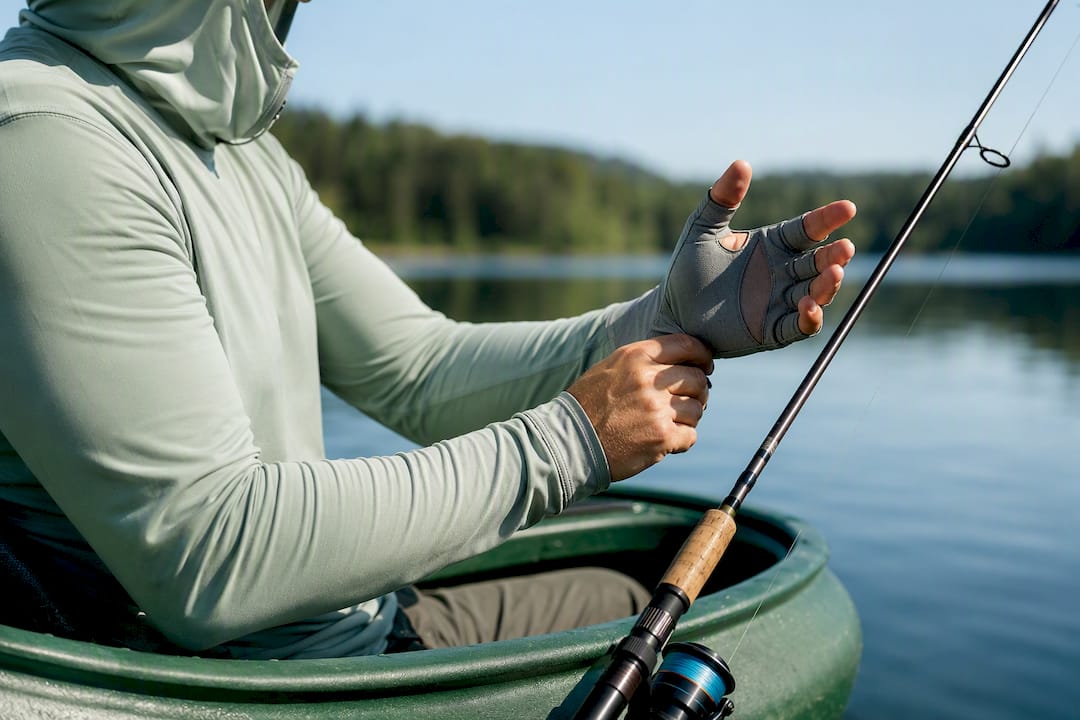
Footwear needs a rethink too. Many kayak anglers prefer closed-toe water shoes over open sandals, since hooks, fillet knives, and tackle boxes all live within reach of bare toes. A wide, stable stance in the kayak also means booties with a firmer sole hold up better than flexible neoprene socks.
Layering still follows the same base, mid, shell logic, but fishing kayaks often sit lower and wetter than recreational sit-on-tops, so a slightly heavier quick-dry layer on the bottom half makes sense even on a warm day. Pack an extra dry layer regardless of forecast, since a full day on the water means more chances for spray, a dropped rod, or an unplanned dip retrieving gear.
Cleaning and Storing Your Kayaking Clothes
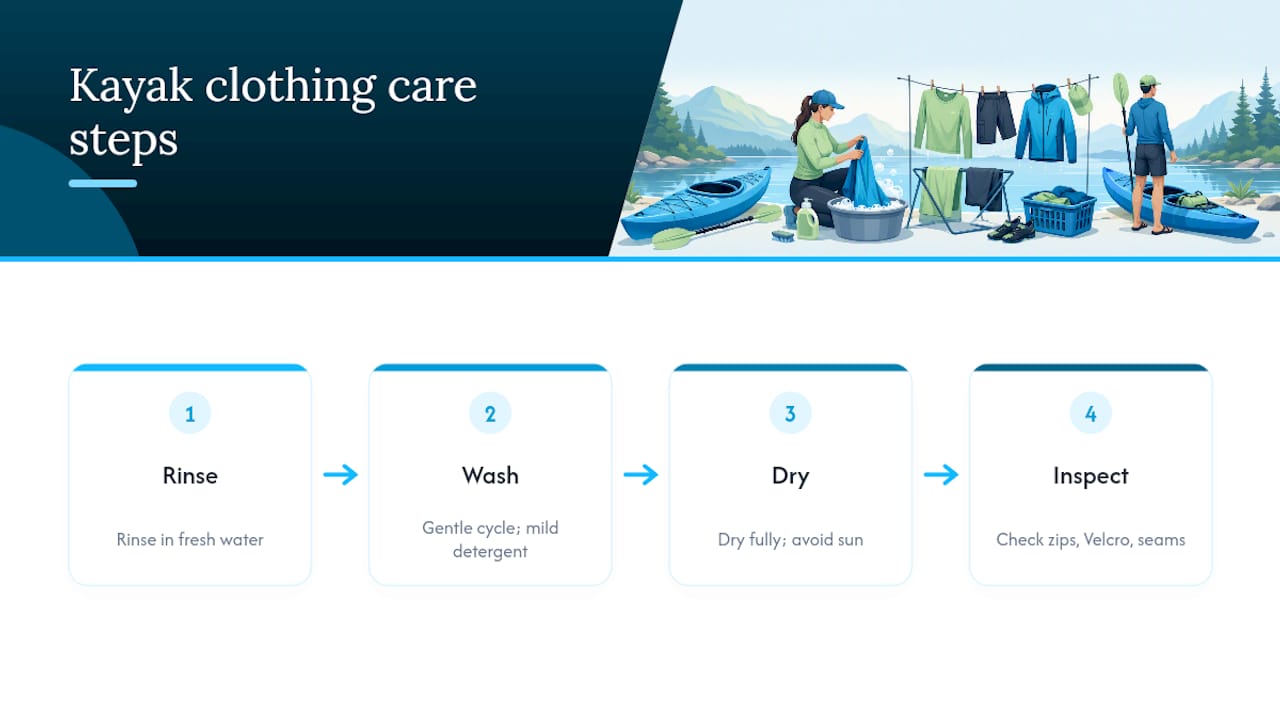
Rinse everything in fresh water as soon as you’re off the water, especially after saltwater paddling. Salt crystals left in neoprene or technical fabric break down elasticity over time and start to smell no matter how many washes you run later.
Wash quick-dry synthetics and neoprene on a gentle cycle with a mild detergent, never fabric softener, which coats wicking fibers and kills their moisture-wicking function. Neoprene booties and wetsuits do best hand-washed and hung to dry away from direct sun, since UV exposure breaks down neoprene faster than regular wear does.
Dry everything fully before storing it. Damp gear folded into a bag grows mildew within a day or two, and that smell doesn’t come out easily once it sets in. Hang rashguards and paddling jackets rather than folding them tightly for storage, which helps them keep their shape season to season.
Check zippers, Velcro, and seams for salt buildup or fraying every few trips. A little maintenance between outings costs a few minutes and saves you from replacing a paddling jacket a season early.
What I’ve Learned About Dressing for the Water
Three rules hold up trip after trip. Always pack a spare dry layer, even on a forecast that looks locked-in sunny. Test new footwear with sand or grit in it before you commit to a full day, because comfort in a store fitting room means nothing once sand works its way under a strap. And never let air temperature talk you out of dressing for the water.
I once watched a paddler skip a wetsuit on a clear, 70 degree day because the air felt warm enough. The lake was still fed by spring runoff. Fifteen minutes in, cold water and a capsize turned a pleasant afternoon into a fast, cold swim to shore. Dress for the water. The air doesn’t matter once you’re in it.
— Fillip
Gear Up With Joy Paddling for Your Next Paddle Day
There are paddling-inspired designs built on breathable, quick-dry fabric intended to serve as easy on-shore layers complementary to on-water gear.
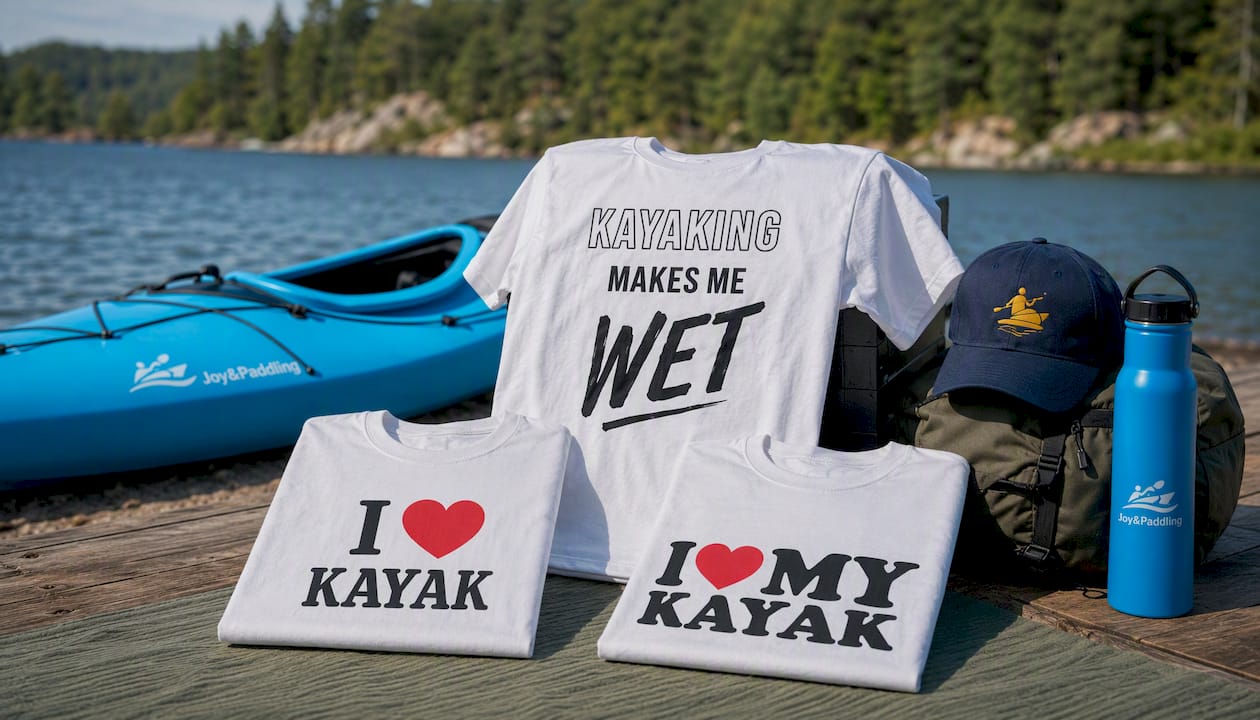
If the outfit ideas above got you thinking about your after-paddle look, the Kayaking Makes Me Wet tee and the I Love Kayak tee both work as a casual layer to pack in your dry bag for the drive home. Paddlers who want their gear to say something about them without sacrificing comfort can also browse the I My Kayak tee or the full T-Shirt prints collection. For the small essentials, the Accessories collection covers waterproof phone bags and the little items that keep your outfit checklist complete. Browse the current lineup and build your next trip’s wardrobe before you hit the water.
Sources
- What To Wear Kayaking: The Complete Guide - Paddling Magazine
- What to Wear Kayaking: Layering Tips - REI
- Kayaking Attire Guide 2026: What to Wear for Every Condition
FAQ
How Should I Dress for Kayaking?
Dress for the water temperature, not the air temperature, using a base, mid, and shell layering system with no cotton anywhere. Swap to a wetsuit or drysuit once water temperature drops into cold territory, and always wear a properly fitted PFD.
What Should I Wear When Kayaking on a Warm Day?
A quick-dry rashguard or UPF long-sleeve shirt, quick-dry shorts or leggings, and secure sandals or water shoes cover most warm-weather trips. Add a wide-brim hat and polarized sunglasses since sun protection and quick-dry fabric are the top priorities in warm conditions.
What Is the 120 Rule for Kayaking?
Dress for immersion when water temperatures are cool to cold enough to be dangerous and a wetsuit or drysuit is recommended; air temperature is less reliable, so when in doubt, dress for immersion anyway. It’s a quick mental check, not a precise formula, so when in doubt, dress for immersion anyway.
What to Wear on Your Feet When Kayaking?
Neoprene booties work best for cool water and rocky launches, while secure-strap sandals or water shoes handle warm-water paddling fine. Skip flip-flops entirely, since they offer no security once water hits your foot.